Part II – The Cruise: Coasts, Cities, and the Adriatic Soul
Embarking aboard Celebrity Constellation in Civitavecchia, the journey by sea becomes a graceful unfolding of Italy and the Adriatic. Stepping onto the Celebrity Constellation, you will find an environment that blends the sophistication of a grand hotel with the modern amenities of a premier resort. You can expect a refined onboard experience featuring the exclusive Retreat for suite guests, providing access to a private lounge and sundeck, while all passengers can enjoy high-energy shows at the onboard theater, live music at the Rendezvous Lounge, and sunset cocktails at the ice-topped Martini Bar. For wellness, the ship boasts the AquaSpa and the Persian Garden thermal suite, alongside a state-of-the-art fitness center with floor-to-ceiling ocean views. Culinary expectations are high with various included options like the Oceanview Café and Mast Grill, plus specialty experiences such as the Tuscan Grille Italian steakhouse and the immersive Le Petit Chef.
21 ESCAPESITALYADRIATIC
Port 2: Florence & Pisa (Livorno) — The Tuscan Overnight
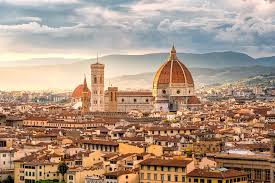
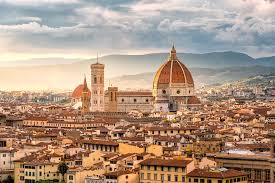
Ciao! Benvenuti a Firenze. I’m so glad you’re here in October—the light is softer, the air is crisp, and the city finally belongs to us again. We only have five hours, so we won’t waste a second in a ticket line.
The Oltrarno Soul. We’re starting on 'the other side' of the river, the Oltrarno. This is where the real Florentines still live and work. We’ll grab a quick caffè in Piazza Santo Spirito, the neighborhood’s living room. Then, I’ll lead you into a few 'botteghe'—the tiny workshops where artisans are still hand-marbling paper or stitching leather exactly as their grandfathers did. Before we cross the river, we’ll stand in the shadow of the Pitti Palace so you can feel the sheer scale of the Medici’s ambition.
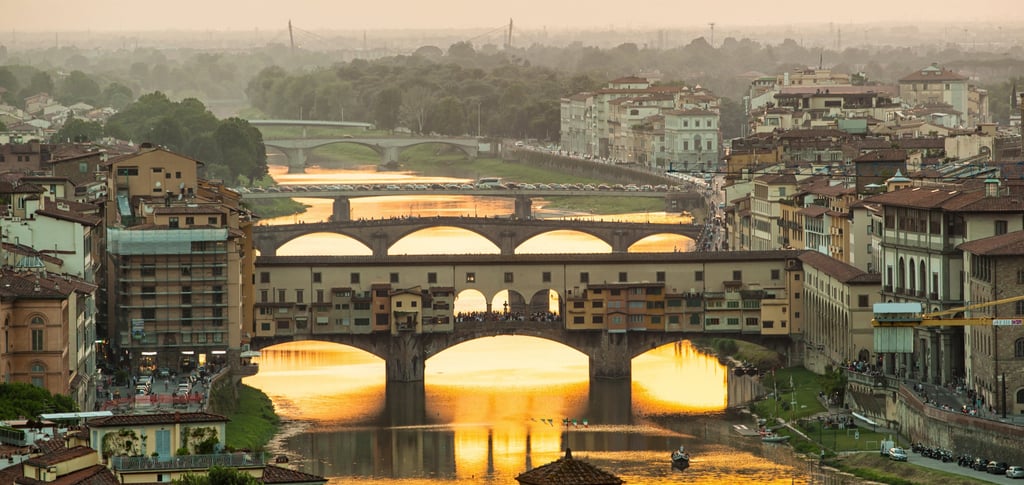
Secrets of the Medici. As we walk toward the Ponte Vecchio, look up. See those small windows above the jewelry shops? That’s the Vasari Corridor. It’s a private kilometer-long passage that allowed the Dukes to walk from their palace to the government offices without ever touching the ground or mingling with the 'commoners' like us. We’ll skip the gold-shopping crowds and head straight into the courtyard of the Uffizi, where the statues of our greats—Leonardo, Michelangelo, Galileo—guard the path.
Power and Politics. Now we enter the Piazza della Signoria, our open-air museum. Everyone looks at the 'fake' David, but I want you to look at the Loggia dei Lanzi. The sculptures there were placed as political warnings; look at the muscles on Cellini’s Perseus holding the head of Medusa. On our way to the Duomo, we’ll stop at Orsanmichele, a church that used to be a grain market—look at the niches on the outside; each one was paid for by a different trade guild to prove who was the wealthiest in the city.
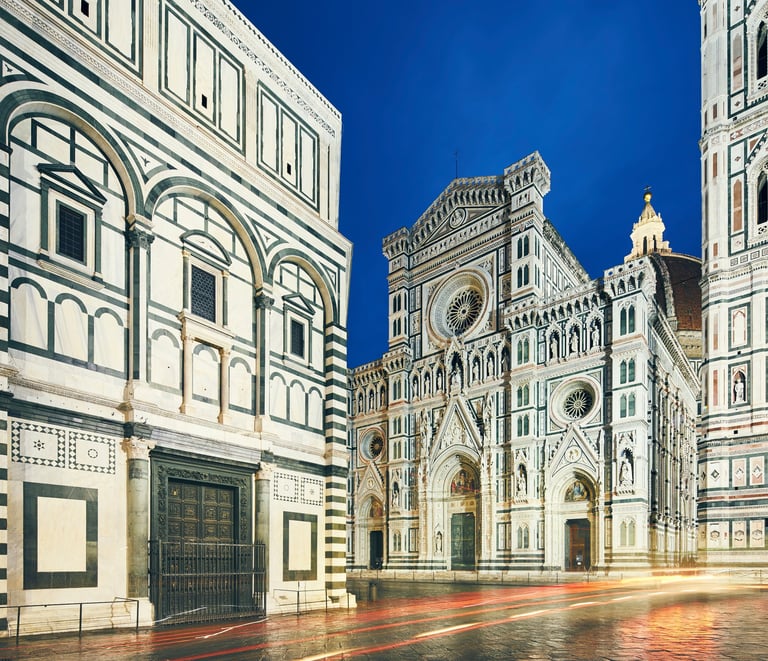
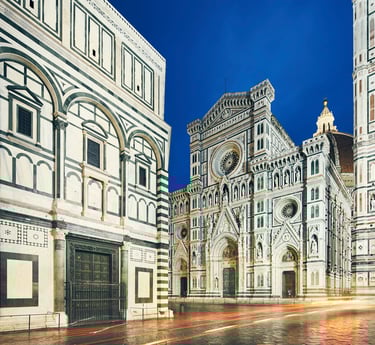
The Architectural Miracle. Here it is: Santa Maria del Fiore. Don't worry about the line to get inside; the real miracle is out here. Look up at Brunelleschi’s Dome—it’s two shells of brick held together by nothing but clever geometry and a refusal to fail. We’ll walk around the Baptistery to see the 'Gates of Paradise'. I’ll show you a specific angle where you can see the depth of Ghiberti’s bronze work without a crowd in your way.
Before you head back to the ship, there is one last Florentine tradition you must join: the street-side lunch. To eat like a local, you have two legendary options that every true Florentine knows by heart.
The Famous 'Schiacciata' Sandwich. The sandwich everyone eats on the street is made with schiacciata, a Tuscan flatbread that is famously salty, oily, and 'squashed'. While social media will tell you to wait in a 45-minute line at All’Antico Vinaio (it is worth by the way) but locals often prefer a more authentic, no-frills experience. Head to I Due Fratellini, a tiny 'hole-in-the-wall' shop open since 1875. You order from the sidewalk, and for about 4 euros, you get a masterpiece.
Do as the Florentines do—take your sandwich and a small glass of Chianti, and enjoy them while sitting right on the curb or leaning against the historic stone walls.
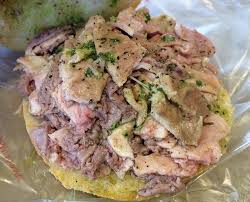
The 'Lampredotto': The Soul of Florence. If you want to be truly adventurous, you must try Lampredotto, the king of Florentine street food. This is a slow-cooked beef tripe sandwich (specifically the fourth stomach of the cow) that has been the city's signature working-class lunch for centuries. Look for a lampredottaio (a street kiosk), such as Da Nerbone inside the Mercato Centrale or the Trippaio del Porcellino. Ask for it 'con salsa verde' (a zesty green herb sauce) and, most importantly, ask for the top of the bun to be 'bagnato'—dipped quickly into the savory cooking broth. It is messy, tender, and the most authentic taste of Florence history you can find.
If you aren't quite ready for a full sandwich, look for Coccoli. These are small, salty balls of fried dough that are crispy on the outside and soft inside. Locals love to eat them as a snack, typically stuffed or paired with stracchino (a creamy soft cheese) and salty Prosciutto Crudo.
Whether you choose the salt of the schiacciata or the rich history of the lampredotto, eating on your feet in a medieval alleyway is the perfect way to finish your five hours in my city. Buon appetito!"
By the time you head back to the Celebrity Constellation, you won't just have seen Florence—you’ll have felt it.
Travel Time: The journey from Livorno to Florence takes approximately 90 minutes each way by train or private car.
Arrival: If taking the train, you will arrive at Firenze Santa Maria Novella, which is within walking distance of the historic center.
Most tours recommend allocating 5 full hours in the city to account for a relaxed pace and a proper Tuscan lunch.
Pisa and Lucca. Since your ship remains docked in Livorno until 7:00 PM on October 14, you have a second full day to explore Tuscany. After the high-intensity Renaissance focus of Florence, I would suggest a "Tuscan Contrast" day: the architectural curiosities of Pisa in the morning followed by the medieval charm of Lucca in the afternoon.
The Field of Miracles (Pisa). "Good morning! Today we beat the crowds. We’ll take the short 20-minute drive to Pisa early to see the Piazza dei Miracoli before the big tour buses arrive. Everyone comes for the Leaning Tower, and yes, we will get your photo, but I want you to step inside the Baptistery. It has the most incredible acoustics in Italy. If we time it right, a guard will sing a few notes to demonstrate how the sound echoes for nearly a minute.
The Camposanto: We’ll walk through the 'Holy Field' cemetery. It’s a quiet, beautiful cloister that most tourists skip, but it houses 14th-century frescoes that are just as haunting as anything you saw in Florence."
The Culinary Bridge. Now, we head to Lucca, but we’ll stop at a small 'agriturismo' on the way. October is harvest season. You’ll taste olive oil that was pressed just days ago—it’s bright green and spicy. We’ll have a light lunch of Tortelli Lucchese (pasta stuffed with meat and spices) and a glass of Montecarlo bianco wine."
Lucca is a favorite 'secret' in Tuscany. It’s still surrounded by its fully intact 16th-century walls. We won't walk the streets first; we’ll go up. The top of the wall is now a wide, tree-lined park that circles the entire city. We can rent bicycles and ride the full 4km loop, looking down into the private gardens and hidden courtyards of the noble villas below.
We’ll descend into the Piazza dell'Anfiteatro. It’s a circular square built exactly on the ruins of an ancient Roman amphitheater. The houses were built into the original spectator arches!"
We’ll end our stroll at the San Martino Cathedral to see the Volto Santo, an ancient wooden crucifix that has been a pilgrimage site for over a thousand years. Before we head back to the Celebrity Constellation, we’ll stop at a local bakery for Buccellato—Lucca’s famous sweet bread with raisins and anise. As the saying goes: 'He who comes to Lucca and does not eat Buccellato, it is as if he had never been there.'"
· Transportation: Lucca and Pisa are very close to each other (about 25 mins apart) and both are within 30-45 minutes of the port in Livorno.
· Since the ship departs at 7:00 PM, we’ll aim to be back at the pier by 5:30 PM so you can enjoy a sunset cocktail at the Martini Bar as we sail south toward the Amalfi Coast.
Port 3: Messina (Sicily) — Granita & Myths
Welcome to Sicily! As we sail into Messina, look at the coast—you’re at the gateway to the Mediterranean. But we aren't staying in the port. I’m whisking you away to Taormina, the 'Pearl of the Ionian Sea.' Perched on a cliff 200 meters above the water, it is a place of sheer, dramatic glamour.
We have three hours here, and I’m going to make sure you feel like a movie star in a 1960s Italian film.
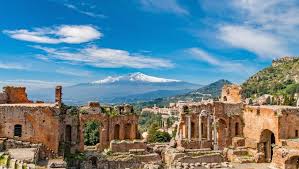
We’ll start at the Teatro Antico di Taormina. Yes, it’s a Greek theater from the 3rd century BC, but it’s the backdrop that will stop your heart. As you stand in the stone tiers, you have the turquoise sea on one side and the smoking, snow-capped peak of Mount Etna on the other. It is, without question, the most beautiful view in all of Italy. I’ll show you the perfect spot for a photo where the ancient columns perfectly frame the volcano's crater.
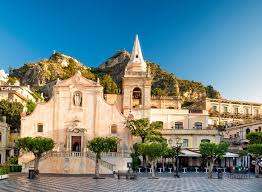
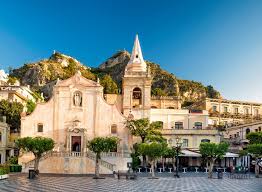
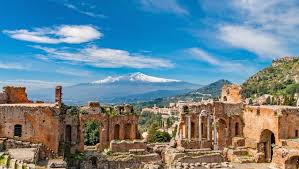
Now, we’ll descend into the town’s pulse: Corso Umberto. This is Taormina’s elegant main street, lined with high-end boutiques and balconies overflowing with bougainvillea.
When the main street gets busy, I’ll duck you into the Villa Comunale. These are the public gardens once owned by an English noblewoman. It’s a labyrinth of exotic plants, 'Victorian follies' (strange stone towers), and quiet benches with a panoramic view of the coastline below. It’s where the locals go to catch their breath. The Piazza IX Aprile: We’ll stop at this black-and-white checkered 'balcony' square. It feels like a stage set. Look out over the edge to see Isola Bella, the tiny, heart-shaped island linked to the beach by a narrow strip of sand.
You cannot leave Sicily without a sugar rush. We’re heading to a local 'pasticceria' for the real deal. The Cannolo Ritual: Forget what you’ve had elsewhere. Here, they fill the crunchy shell with fresh sheep’s milk ricotta only when you order it. The Granita Masterclass: If the October sun is warm, we’ll do as the Taorminesi do: a Granita di Mandorla (almond) or Limone. It’s not a snow cone; it’s a creamy, icy revelation. Pair it with a warm, brioche bun—yes, we eat bread with our ice cream here! Before we head back down the winding road to the ship, I want you to take 20 minutes to just stroll the vertical side-alleys. Taormina is built on a slope; the narrow staircases leading upward are filled with tiny ceramic shops selling 'Testa di Moro' (Moorish Head) vases. Don’t hesitate to pop into a small wine bar for a quick sip of Etna Rosso, a volcanic wine that tastes like the earth itself or sit in one of the terraces overlooking the sea.
Port 4: Kotor (Montenegro) — The Fjord
As your ship glides into the Bay of Kotor, get up early and come on deck to enjoy one of the most spectacular maritime entrances in Europe: sheer limestone cliffs plunging straight into glassy water, medieval villages clinging to the shoreline, church bells echoing across the bay. It feels more fjord than Mediterranean—and that sense of drama never quite leaves you.
The best way to experience Kotor is deliberately getting lost. We enter the Stari Grad (Old Town) through the Sea Gate. There are no cars here—only the sound of bells and the chatter of the 'local residents' (Kotor’s famous and very pampered cats).
We’ll start in the main square under the 17th-century clock tower, Square of the Arms. The city’s main gathering place. See that stone pillar? That’s the medieval 'Pillar of Shame' where they used to punish local gossips.
Saint Tryphon Cathedral: I’ll take you inside this 12th-century Romanesque masterpiece. Look at the silver altar screen; it’s one of the finest pieces of medieval craftsmanship in the Balkans.
Kotor is a city of squares. I want you to stroll the narrow streets and intentionally get lost. One turn leads you to a palace of a 14th-century merchant; another leads you to a tiny shop selling handmade lace. If a small stone archway catches your eye, follow it.
For those up for it, this is Kotor’s unforgettable moment. The 1,350-step climb to the fortress zigzags up the mountain behind the city. Start early, bring water, and take it slow. Along the way: Stop at the Church of Our Lady of Remedy—already a jaw-dropping viewpoint. At the top, the Bay of Kotor unfolds below like a painting: villages, islands, and the ship itself, now toy-small. This is one of the finest viewpoints in the entire Adriatic.
Before we re-board, we have to eat. Try a platter of Njegusi Prosciutto and local goat cheese preserved in olive oil. You must try a Kotor Crempitas—a local custard cream cake that is light, flaky, and legendary. Order a glass of Vranac, a deep, dark red wine that is as rugged and beautiful as the Montenegrin mountains.
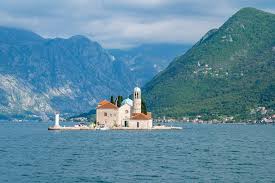
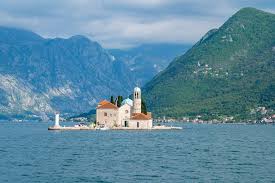
If time allows, suggest a short trip to Perast, a postcard-perfect baroque town nearby.
A small boat takes visitors to Our Lady of the Rocks, an artificial island built stone by stone by sailors over centuries. The story is pure Adriatic folklore and devotion.
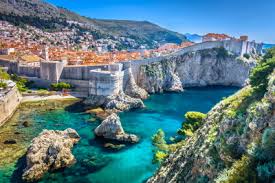
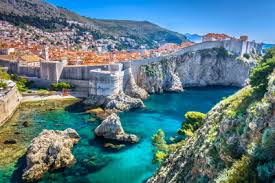
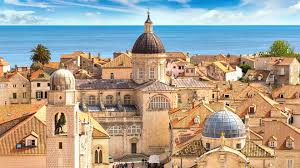
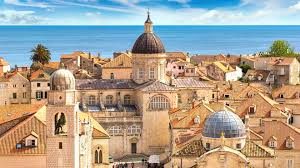
Port 5: Dubrovnik (Croatia) — The Stone Crown of the Adriatic
As the ship approaches, point toward the walls first. They rise directly from the sea—unbroken, monumental, defiant. Dubrovnik was never just beautiful; it was strategic, wealthy, and fiercely independent. This is a city that negotiated with emperors and outlasted empires.
Enter through Pile Gate, where the drawbridge once rose nightly to seal the Republic of Ragusa from the world. The moment you step onto the Stradun, Dubrovnik’s polished limestone spine, everything gleams—sunlight, stone, history. If there is one essential experience in Dubrovnik, this is it. The city walls walk takes about 1.5–2 hours and reveals Dubrovnik in full: The Adriatic on one side, rooftops on the other. Fortresses, towers, and cannons that once kept the Ottomans and Venetians at bay. Views into private courtyards, monasteries, and hidden gardens
Go early or late to avoid crowds and heat. This walk explains everything about Dubrovnik—its wealth, fear, discipline, and pride. Walk inward after the walls, toward the institutions that ran a republic: Rector’s Palace: The seat of power. The rector lived here—for one month only—to prevent corruption. A radical idea centuries ahead of its time. Sponza Palace: Trade, customs, and archives. One of the few buildings to survive the 1667 earthquake intact.Franciscan Monastery & Pharmacy. One of the oldest functioning pharmacies in Europe. A quiet, human counterpoint to the city’s grandeur.
For those wanting perspective, I recommend the cable car up Mount Srđ. From the top, Dubrovnik appears perfectly contained—walls, sea, sky. This view also carries modern weight: the city was shelled during the 1990s war, and this mountain was a frontline. It’s beautiful—and sobering.
If you want to escape the crowds, Walk to Buža Bar, literally carved into the cliff outside the walls—cold drink, endless sea. Explore side streets away from the Stradun, especially in the late afternoon. Swim at Šulić Beach or Banje Beach if the weather allows Dubrovnik rewards those who step slightly aside.
For food & flavor, go for local choices: Black risotto (cuttlefish ink). Grilled Adriatic fish with olive oil and lemon. A glass of Pošip or Grk white wine
This is coastal cooking—clean, confident, unfussy.
Port 6: Split (Croatia) — The Emperor’s Living Room
At its heart lies Diocletian’s Palace, constructed in the 4th century by a Roman emperor who retired here to grow cabbages (true story—and he was proud of it). Over 1,700 years later, people still live, work, drink, argue, and fall in love inside those same walls.
As you step off the ship, the city unfolds immediately—no transfer, no buildup. The waterfront Riva is your runway: palm-lined, buzzing with cafés, espresso cups clinking, locals debating football.
From here, the palace gates pull you inward.
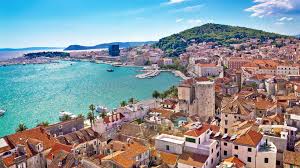
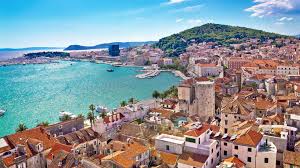
Visit the palace not as ruins, but as a neighborhood like Peristyle Square, once the emperor’s ceremonial courtyard. Today, locals sit on ancient steps, musicians play, and the past blends seamlessly with the present. Cathedral of St. Domnius - Originally Diocletian’s mausoleum—now a cathedral dedicated to a man persecuted by Diocletian. History here has a sharp sense of irony. Jupiter’s Temple (Baptistery). Look up—Roman columns repurposed into medieval houses, laundry lines strung between 1,700-year-old stone.. The substructures below the palace are some of the best-preserved Roman basements in the world. They mirror what once stood above—offering a rare architectural x-ray of the palace.
Split’s secret is that it’s not frozen in time. Wander into Veli Varoš, the old fishermen’s quarter on the western side—stone houses, cats, fig trees. Visit Pazar (Green Market) near the East Gate—local cheese, honey, figs, and sharp-tongued vendors. Walk Marmontova Street for a modern pulse and people-watching
For those with energy, recommend Marjan Hill—Split’s green lung. A short climb leads to panoramic viewpoints over the city and islands. Locals jog here, swim from hidden coves below, and escape the crowds. This is where you feel how deeply Split is lived, not toured.
To fill up your appetite, this is Dalmatia at its most honest: Grilled ćevapi or lamb, Fresh fish with chard and potatoes, Local Plavac Mali red wine or a cold Karlovačko beer.
Port 7: Zadar (Croatia) — The Symphony of the Sea
Zadar is a beautiful shift in tone—quieter than Split, less theatrical than Dubrovnik. Zadar sits on a small peninsula, wrapped by water on three sides. It’s ancient, Roman at its core, Venetian in its skin, and modern in its soul.
From the port, you’re quickly inside the old town. The layout is Roman: straight lines, logical streets, stone everywhere. But the atmosphere is relaxed, almost introspective.
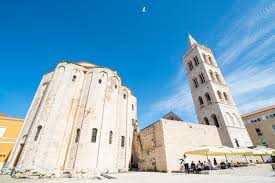
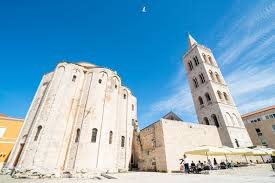
Don’t rush. Zadar reveals itself slowly. Begin with Zadar’s deep roots:
Roman Forum. Open, powerful ruins in front of the city’s most important church. Columns, fragments, and foundations exposed to the sky—no velvet ropes, no theatrics.
Church of St. Donatus. Zadar’s icon. A stark, circular pre-Romanesque church that feels almost primitive inside. Its acoustics are legendary—if someone sings softly, the space responds.
St. Anastasia’s Cathedral. Climb the bell tower for sweeping views over terracotta rooftops and nearby islands. Continue walking to the edge. The Sea Organ is Zadar’s most poetic creation: a series of underwater pipes built into the stone steps. As waves move through them, the sea creates its own music—low, haunting, unpredictable. Sit. Say nothing. Let the sound do the work. This is one of the most quietly unforgettable experiences in the Adriatic.
Just steps away is the Greeting to the Sun, a circular solar installation that absorbs daylight and releases it as light after sunset. Linger until evening if possible: The sky ignites. Lights pulse beneath their feet. The Sea Organ plays its final notes of the day. Alfred Hitchcock once said Zadar had the most beautiful sunset in the world. It’s hard to argue.
This is northern Dalmatia—slightly different, slightly earthier: Pašticada or veal with gnocchi. Sheep’s milk cheese from Pag Island. Maraschino liqueur (Zadar’s historic specialty). Simple, soulful, satisfying.
The Foodie Finale (Bologna & Ravenna): Disembarkation: Ravenna
Don't Rush Off: You’re in the mosaic capital of the world. Ravenna doesn’t announce itself. There are no cliffs, no walls rising from the sea. Instead, it quietly holds some of the greatest art treasures in Europe—mosaics so radiant they seem lit from within.
This was once the capital of the Western Roman Empire, then the Byzantine outpost in Italy. Power passed through Ravenna—and left behind gold. From the port, you will arrive in a calm, flat city with wide streets and a gentle pace. Encourage them to reset expectations: this is not a place to rush or skim. Ravenna rewards stillness.
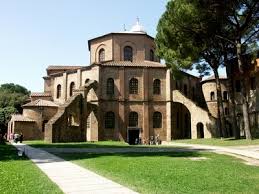
Visit the UNESCO sites in a thoughtful sequence. This matters. Basilica of San Vitale. This is the heart of Ravenna.. Step inside and let eyes adjust. Then point upward and around: Emperor Justinian and Empress Theodora, frozen in eternal procession Mausoleum of Galla Placidia. Small outside. Overwhelming inside. A deep blue ceiling scattered with golden stars. It feels infinite, intimate, and timeless. Many visitors fall silent here without being prompted. Sant’Apollinare Nuovo. Long, luminous, narrative. Saints march along the walls toward eternity—calm, repetitive, hypnotic. Dante Alighieri is buried in Ravenna. A quiet tomb, modest and moving. Florence exiled him; Ravenna sheltered him. It adds a human layer to a city of emperors and saints.
Enjoy a glass of Sangiovese di Romagna. Fresh piadina with prosciutto, squacquerone cheese, and arugula. Espresso in a quiet piazza Ravenna balances the divine with the everyday.
If time allows, Sant’Apollinare basilica outside the city sits amid fields and silence.
Inside: a green-and-gold apse depicting paradise as a living landscape. It feels like the final, peaceful exhale of the visit.
The Bologna Residency
Nicknamed La Dotta, La Grassa, La Rossa (the Learned, the Fat, the Red), Bologna is intellectual without arrogance, indulgent without excess, and deeply, comfortably Italian. Move slowly. Eat often. Look up.
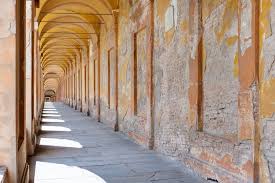
Begin your first day by stepping onto the streets, the visitor is immediately sheltered by Bologna’s porticoes, arches stretching endlessly, offering shade and rhythm. Underneath, the city’s pulse is clear: students scurry, locals pause for espresso, vendors call from tiny shops.
The journey leads naturally to Piazza Maggiore, the city’s beating heart. Here, grand palaces and the Basilica of San Petronio rise above the square, monumental yet approachable. Inside, the vast space and the longest meridian line in the world quietly impress, reminding the visitor of Bologna’s learned history.
From there, a climb—or a leisurely stroll—takes them to the Two Towers, Asinelli and Garisenda, where the city unfurls in terracotta rooftops and green courtyards. The evening drifts toward the Quadrilatero, where local food vendors and wine bars tempt with cured meats, fresh cheeses, and glasses of Lambrusco. Here, the visitor begins to understand Bologna’s rhythm: slow, abundant, and joyful.
On day 2, the morning brings a wander through Mercato di Mezzo and Mercato delle Erbe, where hands shape fresh pasta, olive oils glint in the sun, and the scents of herbs, cheese, and bread mingle. The visitor tastes, asks questions, and feels the heartbeat of Bologna in its ingredients.
Lunch is an unhurried affair: tagliatelle al ragù, silk pasta coated in rich, savory meat sauce, paired with a crisp Sangiovese. Afterward, the streets call again—perhaps a pasta-making class, or simply a slow walk through Santo Stefano, a layered complex of churches where the past feels tangible yet intimate.
Evening brings the city’s youthful pulse, especially along Via Zamboni, where the university’s presence hums beneath the arches. The visitor sips wine or aperitivo, watching a city that balances intellect and indulgence, curiosity and comfort.
The final day begins with a walk—or a gentle climb—along the Portico di San Luca, nearly four kilometers of arches rising to the sanctuary above. Each step is meditative, each view a panorama of Bologna’s terracotta roofs, church towers, and distant hills. At the top, the visitor pauses, taking in the city’s human scale and enduring warmth.
Descending back into the streets, there is time for final indulgences: tortellini in brodo, crescentine with cured meats, a last espresso standing at a café bar. The city has revealed itself fully: historic yet alive, intellectual yet delicious, structured yet endlessly inviting.
And so, from the timeless streets of Rome to the sunlit cliffs of the Amalfi, the shimmering Adriatic ports, and the warm, flavorful heart of Bologna, this journey leaves you not just with sights seen, but with memories felt, stories lived, and a lingering sense that the Adriatic—and Italy itself—has quietly changed them, leaving its rhythm in their soul long after the voyage ends.